The persecution of musicians by the Nazi regime and its global consequences are the focus of the new long-term research project »Nazi Persecution and Music History«. The aim of the research project is, over the next 18 years, to revise and supplement the historiography of 20th-century music against the backdrop of Nazi persecution.
This long-term project by the Academy of Sciences in Hamburg, which is being carried out in collaboration with the University of Hamburg and the University of Music and Theatre Muich, will commence on 1 January 2025. Prof. Dr Friedrich Geiger, Professor of Historical Musicology at our university’s Institute of Musicology and Dean of Research at the HMTM, will take on the overall leadership of the project. Funding totalling 7.9 million euros will be available until the end of the 18-year funding period on 31 December 2042.
Prof. Dr Friedrich Geiger, project lead and head of the research unit at the HMTM: »I am delighted that our project will soon be able to commence work as part of the Academies’ Programme. This will place research into the Nazi persecution of musicians on an entirely new footing – in close collaboration with international initiatives on the subject. The collaboration between the University and the HMTM on a joint long-term project ensures a productive exchange between academia and artistic practice. For both fields, a more precise understanding of the scale of the destruction and its long-term global consequences is more necessary than ever – particularly in light of the growing threat posed by authoritarian regimes.«
For the HMTM, this project by the Hamburg Academy of Sciences, in collaboration with the University of Hamburg, is a key component of its research activities within the »Music and Dictatorship« research focus. In conjunction with the research being carried out at the HMTM’s »Ben-Haim-Forschungszentrum«, this is leading to the establishment in Munich of a centre for research into musicians persecuted by the Nazis. For the HMTM, the academic and artistic-practical engagement with this topic forms part of its understanding of continuous and actively practised remembrance work.
About the project »Nazi Persecution and Music History«
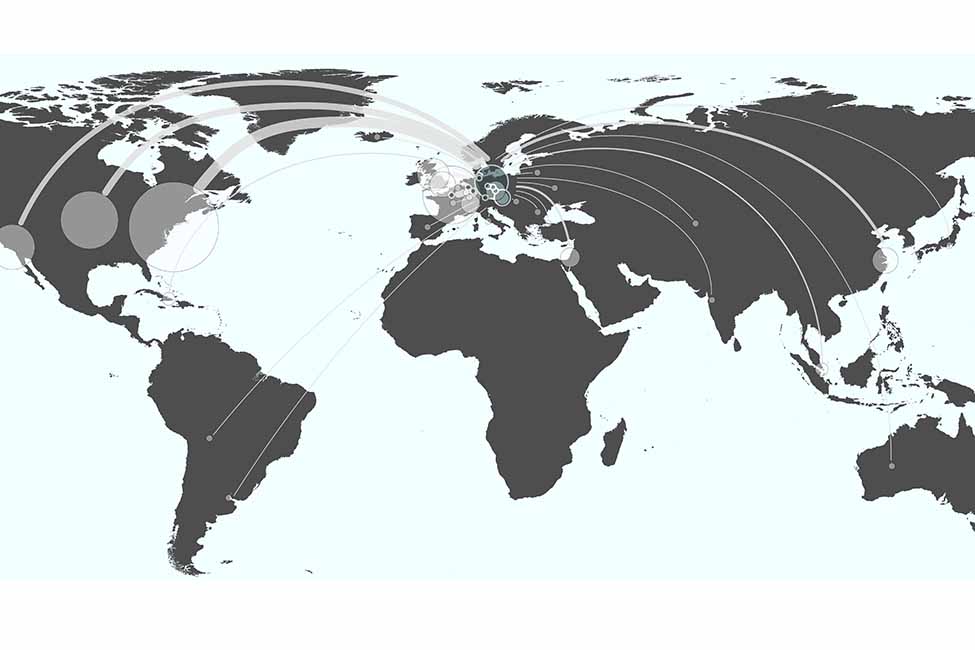
The persecution of musicians by the Nazi regime had a massive, lasting and global impact on music as an intangible cultural heritage. In Germany, as well as in the annexed and occupied countries, there were considerable losses; yet in exile, there were also productive developments in all areas of musical life. The project »Nazi Persecution and Music History: Revisions from a Biographical and Geographical Perspective« centres on three key objectives:
The research project focuses on musicians from German-speaking countries. The findings relating to individual musicians will be incorporated into the online encyclopaedia of musicians persecuted during the Nazi era (LexM), which is already freely accessible via the University of Hamburg’s website. LexM is currently the most important research tool on this subject. It will be integrated into the new research project and significantly expanded.
Further information on the project:https://www.awhamburg.de/en/research/long-term-projects/nazi-persecution-and-music-history.html
Remembrance work at the HMTM
The University of Music and Theatre Munich (HMTM) actively promotes and supports work relating to the culture of remembrance and regards this as part of its educational mission. Through networking and collaboration, as well as through discussion events, conferences, concerts, performances and productions, the HMTM raises the profile of this remembrance work and forges links with society.
The research focus »Music and Dictatorship«, led by Prof. Dr Friedrich Geiger at the Institute of Musicology at the HMTM, provides key impetus for a critical examination of the historical, social and political dimensions of artistic activity. The »Ben-Haim-Forschungszentrum« at the HMTM, headed by
Dr Tobias Reichard, combines musicological research with musical practice in the context of Jewish music, persecuted musicians and National Socialism. Further research projects in this context are planned at the HMTM.